
Choosing the right hair transplant doctor in Delhi is one of the most important decisions for anyone considering surgical hair restoration. A hair transplant is not simply a procedure in which hair follicles are moved from one part of the scalp to another. It requires medical assessment, careful donor planning, an understanding of hair growth patterns, and artistic judgment to create a natural-looking appearance.
Delhi has several clinics offering hair restoration procedures, making it important for patients to evaluate doctors carefully rather than relying only on advertisements, celebrity associations, or attractive treatment packages.
Here are some important factors to consider before selecting a hair transplant surgeon.
1. Check the Doctor’s Medical Qualifications
The first thing patients should verify is the doctor’s medical background.
Hair transplantation involves surgery on the scalp, and the treating doctor should have appropriate medical qualifications and specialised training relevant to the procedure. A background in dermatology or an appropriate surgical specialty can provide valuable knowledge of scalp health, hair disorders, wound healing, and hair restoration.
Patients should check the doctor’s qualifications, training institutions, professional memberships, and relevant experience.
It is also important to ask who will perform the critical surgical steps. The person conducting the consultation may not always be the surgeon performing the procedure.
2. Evaluate Practical Hair Transplant Experience
Academic qualifications are important, but practical experience also matters.
An experienced hair transplant doctor should be familiar with different patterns of hair loss, donor area limitations, graft extraction, implantation planning, and complications that may arise during surgery.
Patients can ask the surgeon about experience with:
-
Male and female pattern hair loss
-
Hairline reconstruction
-
Crown hair transplantation
-
Unshaven FUE procedures
-
Beard hair transplantation in selected cases
Experience with corrective procedures can be particularly useful because repairing an unnatural hairline, overharvested donor area, or poorly planned previous transplant may involve additional challenges.
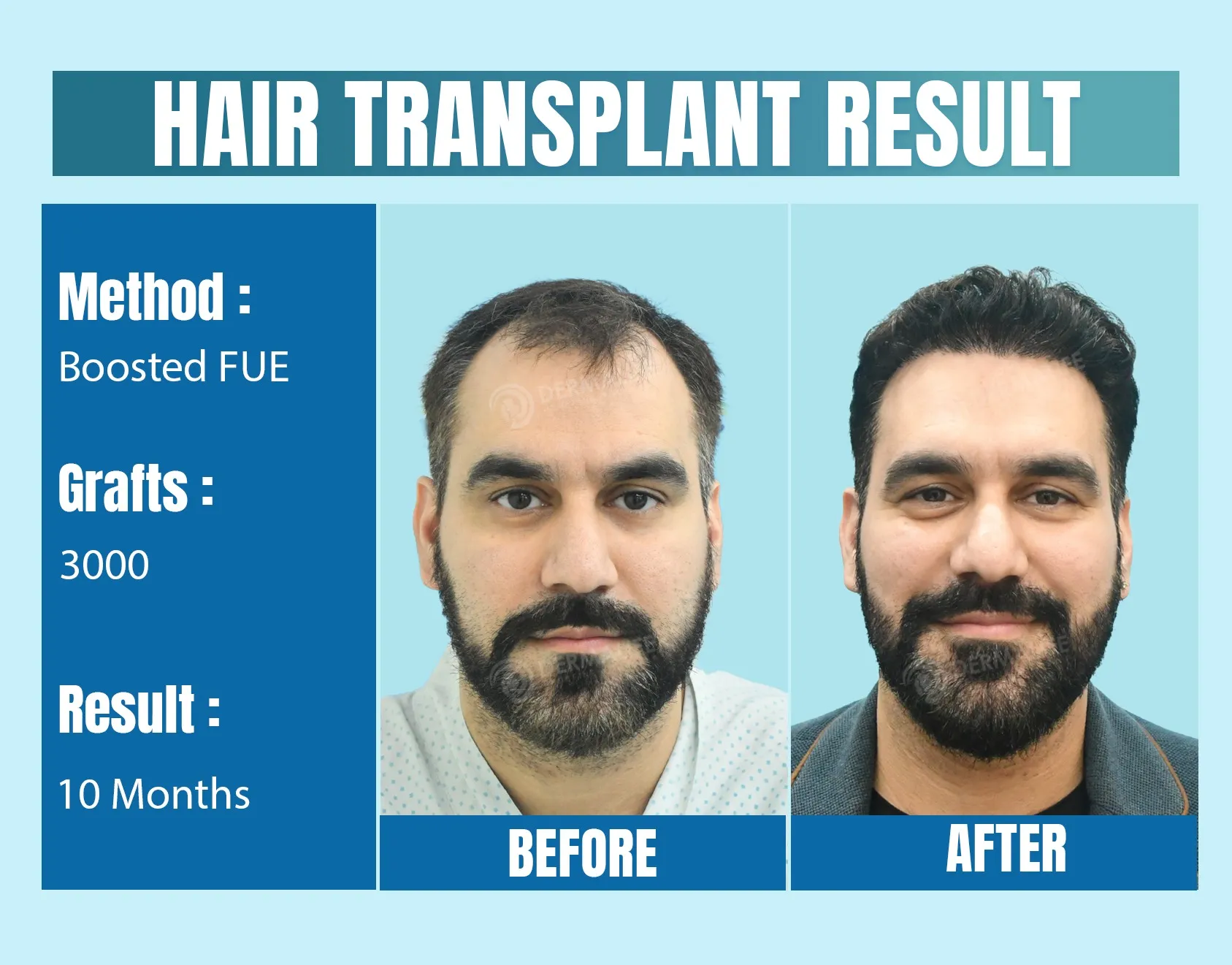
3. Review Authentic Before-and-After Results
Before-and-after photographs can help patients understand a surgeon’s approach to hair restoration.
However, the photographs should be genuine, consistently presented, and supported by relevant treatment information. Ideally, patients should review cases with similar hair loss patterns and characteristics.
Look for:
-
Clear photographs before and after surgery
-
Consistent lighting and camera angles
-
Details about the graft count
-
The time elapsed after surgery
-
Results showing both frontal and donor areas, where appropriate
Hair growth takes time. Early post-operative photographs cannot establish the final outcome. A follow-up period of around 9 to 12 months is generally more informative, although some patients may continue to see changes beyond this period.
4. Understand the Doctor’s Approach to Hairline Design
A natural hair transplant depends on more than the number of grafts implanted.
The surgeon must consider facial proportions, age, existing hairline characteristics, hair direction, and the likelihood of future hair loss. A hairline that looks appropriate for a younger patient may not remain suitable as the patient ages.
The frontal hairline generally requires careful placement of finer, single-hair grafts along the front, with appropriate density behind them.
Patients should be cautious of doctors who promise an extremely low or dense hairline without discussing long-term planning.
5. Ask How the Donor Area Will Be Managed
Donor hair is limited, and poor extraction planning can create visible thinning or an uneven appearance at the back and sides of the scalp.
A responsible surgeon evaluates donor density, hair calibre, scalp characteristics, and the number of grafts that can reasonably be extracted.
Patients should ask how the doctor plans to distribute extractions and whether sufficient donor hair will remain for possible future procedures.
This is especially important for younger patients who may experience further hair loss over time.
6. Understand the Recommended Technique
FUE, or Follicular Unit Extraction, is a widely used method of hair transplantation. It involves extracting individual follicular units from the donor area and implanting them into the recipient region.
Some clinics also offer modified approaches to FUE. Dermalife Skin & Hair Clinic in Delhi, for example, offers its Boosted FUE approach, which uses specialised extraction instruments and a technique the clinic describes as the “No Root Touch Method”.
Patients should ask the doctor to explain the actual procedural differences, graft handling, and suitability of the technique for their condition. The choice of technique should be based on individual assessment rather than marketing terminology.
7. Evaluate the Consultation and Communication
A good hair transplant doctor should be willing to explain the treatment plan clearly.
During consultation, the doctor should discuss the patient’s hair loss pattern, donor capacity, expected graft count, possible limitations, recovery process, and realistic outcomes.
The surgeon should also explain whether medication or non-surgical treatment may be appropriate before considering surgery.
Be cautious of consultations that focus only on selling a high-graft package without a detailed scalp examination.
8. Check Surgical Standards and Follow-Up Care
The quality of treatment also depends on the surgical environment and the team supporting the procedure.
Patients should ask about hygiene protocols, trained staff, graft handling, post-operative instructions, and follow-up appointments.
Hair transplantation is a process that continues after surgery. Patients need guidance about washing, recovery, temporary shedding, and the expected hair-growth timeline.
9. Do Not Choose Only Based on Price
Hair transplant cost in Delhi varies according to graft count, surgical complexity, technique, facilities, and the doctor’s involvement.
An unusually low price may not include all the services a patient needs. However, an expensive procedure does not automatically guarantee better results.
Patients should compare treatment plans, understand what is included, and prioritise medical standards over promotional discounts.
Choosing a Hair Transplant Doctor in Delhi
Patients researching a hair transplant surgeon in Delhi can consider doctors such as Dr. Gaurav Garg, Founder and Director of Dermalife Skin & Hair Clinic, South Delhi.
Dr. Garg is a dermatologist and hair transplant surgeon with postgraduate training from Seth GS Medical College and KEM Hospital, Mumbai, along with additional training in hair transplant surgery in Israel and advanced dermatology and dermatosurgery in Singapore.
Dermalife offers FUE, Boosted FUE, unshaven hair transplantation, beard hair transplantation in selected cases, and corrective hair restoration. The clinic also provides free hair transplant consultations so patients can discuss their concerns and understand suitable treatment options.
Patients should independently review qualifications, clinical experience, and relevant results before making their final decision.
Final Thoughts
The best hair transplant doctor is not necessarily the one who promises the maximum number of grafts or the lowest treatment price. The right surgeon is someone who understands the patient’s hair loss, plans donor usage responsibly, explains the procedure honestly, and focuses on natural-looking results.
Taking time to research qualifications, review genuine outcomes, and attend a detailed consultation can help patients make a more confident and informed decision.
